How a tarmac drive is laid
Step by step, from dig-out to the final roll, with the depths we write on every quote.
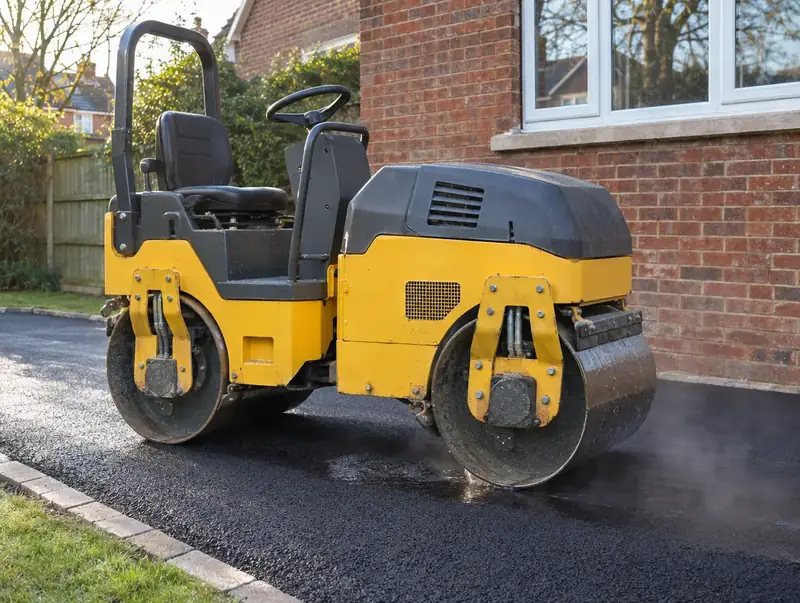
A properly laid tarmac drive has four parts: a compacted stone sub-base, a binder course, a surface course and edge restraint. Each has a job, and each should be written on your quote.
Step 1: Dig out and build the sub-base
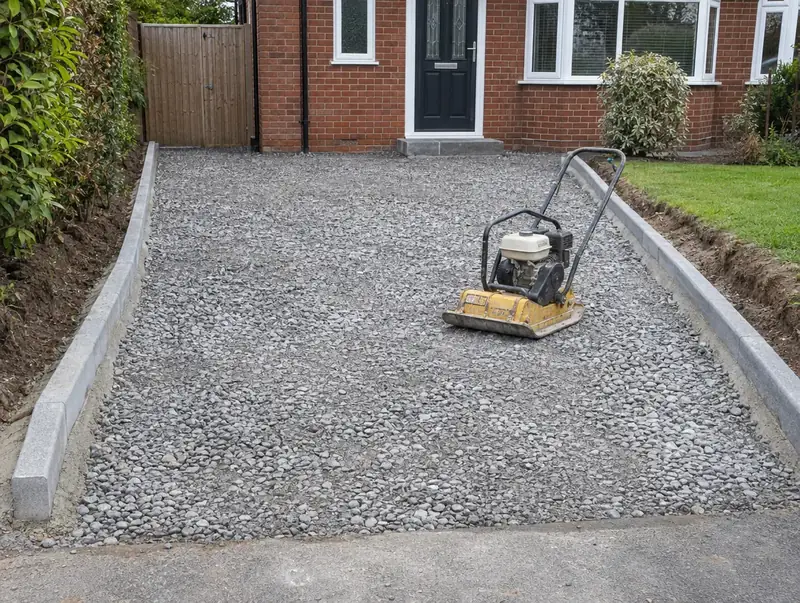
The old surface and soil come out to around 230–250 mm below finished level. A geotextile goes down on soft ground, then MOT Type 1 stone is laid and compacted in layers to about 150 mm. Kerbs or blocks are set on concrete along open edges.
Step 2: Lay the binder course
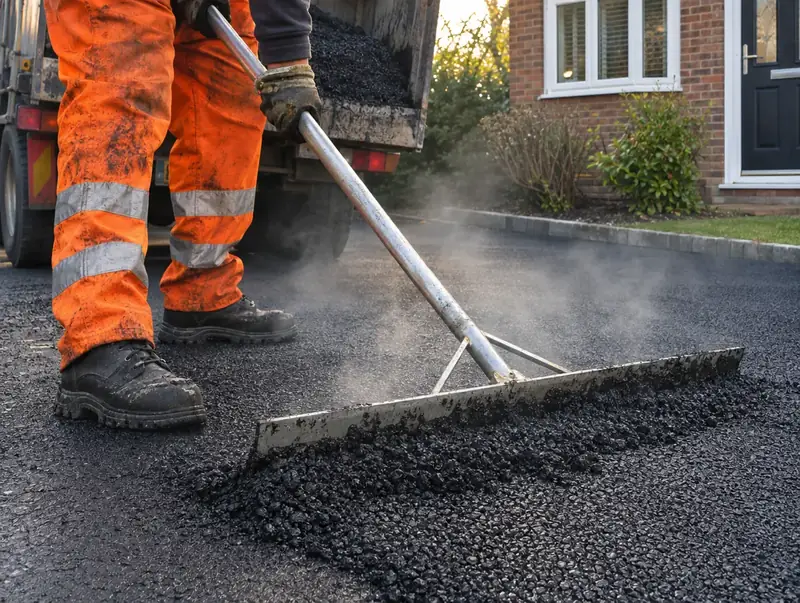
Hot AC 20 dense binder arrives from the plant, is spread to about 50–60 mm and rolled while it is still hot enough to compact. Falls are set at this stage so water runs where it should.
Step 3: Lay and roll the surface course
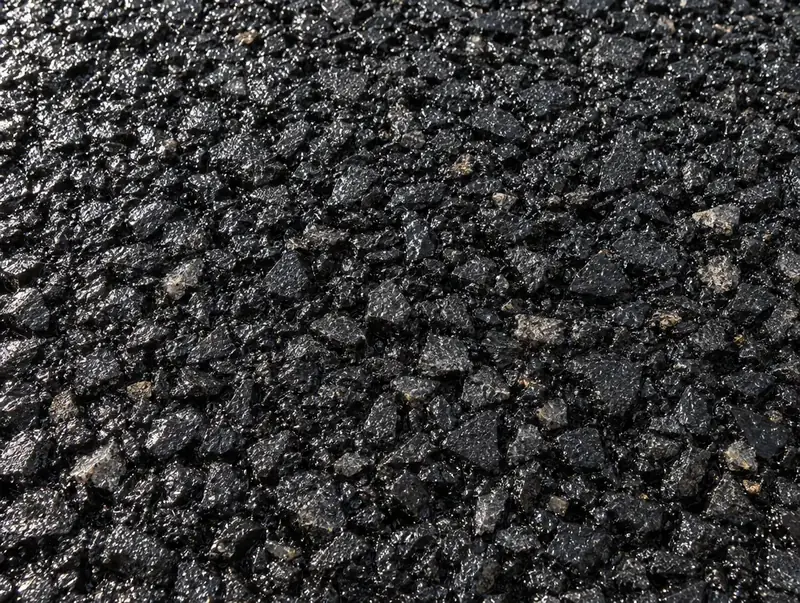
A finer AC 6 dense surface course, about 20–30 mm, goes on top with a bond coat if the binder has cooled or is a day old. It is rolled tight, and the edges are sealed against kerbs and covers.
Step 4: Finish, clean up and aftercare
Covers and channels are checked, the site is cleared, and you get aftercare notes: walk on it once cool, wait at least 48 hours before parking, and avoid turning the wheels while stationary for the first weeks.
Which standards apply?
Asphalt mixes are specified under BS EN 13108 with UK guidance in PD 6691; laying and compaction follow BS 594987:2024. On site that means the right mix, laid at the right temperature, in layers of the right thickness, and compacted while it is hot.
Can tarmac be laid in cold or wet weather?
Within limits. Hot asphalt is never laid on a frozen or waterlogged base, and the standard sets air-temperature limits for stopping and restarting work. See laying tarmac in winter.
Questions
How long does a tarmac driveway take to lay?
Most domestic drives take 2–4 working days, including dig-out, sub-base, edging and the two tarmac courses. Drainage, a dropped kerb or bad weather can add time.
When can I drive on new tarmac?
Walk on it once it has cooled, often the same day. Allow at least 48 hours before parking, preferably 3–5 days, and longer in hot weather. Avoid turning the wheels while stationary for the first few weeks.
Why do you need two layers of tarmac?
The binder course spreads the load and gives a firm, level base; the surface course gives the smooth, sealed finish. One thin layer has to do both jobs and wears out sooner.
Get a written tarmac quote
Send a postcode and a rough size and we'll arrange a survey. Every quote lists the layers, edging, drainage and VAT.
- Surface courseDEPTH + MIX
- Binder courseDEPTH + MIX
- Sub-baseDEPTH + MATERIAL
- Edges, drainage, VATITEMISED