Front garden to tarmac driveway
The tarmac is the easy part of a front garden conversion. What decides whether you can park there is the dropped kerb, which the highway authority must approve, and where the rainwater goes, which decides whether you need planning permission.
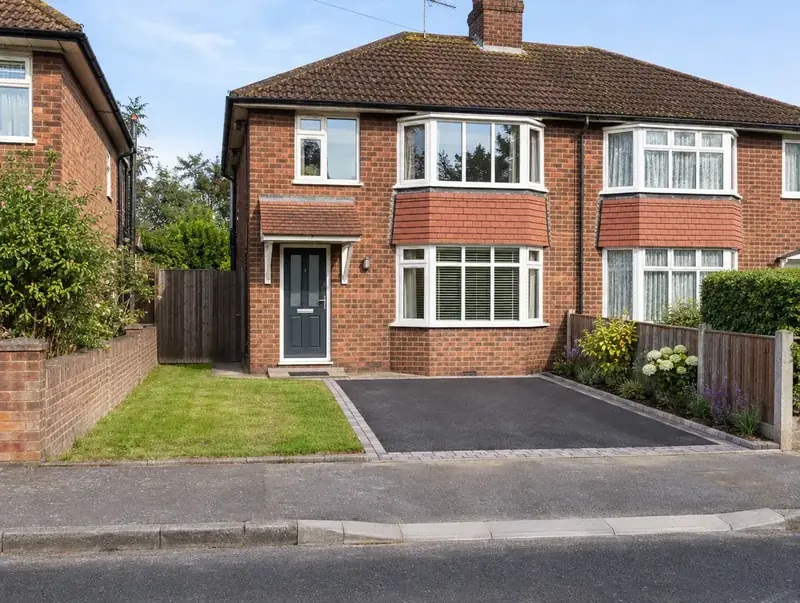
A front garden conversion turns lawn or planting into a parking space: the ground is excavated, a stone sub-base laid, tarmac surfaced on top, and a lowered kerb arranged so a car can cross the pavement legally.
What is included in a front garden driveway conversion?
- Check the space: length, width and gate posts for a car
- Highway authority dropped kerb application guided or handled for you
- Lawn, hedge roots and topsoil removed
- Sub-base and two tarmac courses, or porous asphalt
- Kerbs or blocks as edge restraint
- Water directed to a border, soakaway or channel
- A planted strip kept where it helps drainage and looks
How is it built?
How much does a front garden driveway conversion cost?
As a 2026 guide at our UK midpoint rate, £60–£95 per m² inc VAT. Edging, drainage and access are itemised separately where they apply.
| Item | Guide price (inc VAT) |
|---|---|
| New black tarmac drive, full dig-out and new sub-base | £60–£95 per m² |
| Example: 20 m² drive | £1,300–£2,100 |
| Example: 30 m² drive | £2,000–£3,150 |
| Example: 45 m² drive | £2,700–£4,300 |
Rates vary by region:
| Region | Guide (inc VAT) |
|---|---|
| London | £72–£114 per m² |
| South East | £66–£105 per m² |
| East of England | £63–£100 per m² |
| South West | £62–£98 per m² |
| West Midlands | £60–£95 per m² |
| East Midlands | £59–£93 per m² |
| North West | £58–£92 per m² |
| Yorkshire and the Humber | £58–£91 per m² |
| North East | £56–£88 per m² |
| Wales | £57–£90 per m² |
| Scotland | £59–£93 per m² |
| Northern Ireland | £53–£84 per m² |
Guides only. Your survey turns these into a fixed written price. Full price list · Guide price tool
When it suits
- Terraces and semis with street parking pressure
- Homes adding an electric car charger
- Houses where a drive adds value and convenience
Watch out for
- You must not drive over the pavement without an approved dropped kerb
- Most councils want a minimum length so a car does not overhang the pavement
- Trees, lamp posts and inspection covers in the pavement can stop an approval
How long does it take and how long does it last?
- On site
- Usually 2–4 working days, after the kerb approval
- Lifespan
- Commonly 15–20 years
Do I need planning permission?
It depends where you live and where the water goes.
- England: A new hard surface over 5 m² in front of a house needs planning permission unless it is porous or drains to a lawn, border or soakaway within the property.
- Wales: New front hardstanding should be porous or drain to a permeable area within the property, and work covering 100 m² or more with drainage effects usually needs SAB approval first.
- Scotland: A hard surface between the house and a road is permitted development only if it is porous or drains to a porous area within the property, whatever its size.
- Northern Ireland: More than 5 m² of hard surface in front of a house should be porous or drain to a porous area within the property; DfI Roads approves dropped kerbs.
Dropped kerbs always need the highway authority's approval: the council in England, Wales and Scotland, and DfI Roads in Northern Ireland. Read the full planning guide.
What happens next?
Tell us about the job
Use the guide price tool, the form, WhatsApp or the phone. A postcode, rough size and a couple of photos are enough to start.
Survey and measure
We check the ground, levels, edges, drainage and access, and the planning and kerb position where it applies.
Written specification and price
You get an itemised quote listing every layer, the edging, drainage, waste and VAT. The price is fixed once the spec is agreed.
Build day
Dig-out and base first, then hot binder and surface course rolled in, edges finished and the site cleared. You get aftercare notes before we leave.
Front garden to tarmac driveway: questions
How much does it cost to turn a front garden into a drive?
The tarmac work is typically about £60–£95 per m² including VAT for a full build. A 30 m² space is often about £2,000–£3,150 before edging. The dropped kerb is extra and depends on your council.
Do I need a dropped kerb?
Yes, if you will drive across a pavement or verge. It is an offence to cross a footway without one. Apply to the highway authority, or to DfI Roads in Northern Ireland.
Do I need planning permission?
You may need planning permission for the dropped kerb if the road is classified, and for the drive if it is over 5 m² in England and does not drain to a permeable area. A porous surface or a planted border avoids the drive permission in most cases.
How big does my front garden need to be?
Many councils look for about 4.8 m of depth from the house to the boundary for a car, but each authority sets its own standard. We measure and check before you apply.
Can I keep some of my garden?
Yes, and it helps. A planted strip or border can take the runoff from the tarmac and softens the look of the street.
Where do we offer front garden driveway conversion work?
Across the UK. Choose your area for local prices and towns.
- Bedfordshire
- Berkshire
- Bristol
- Buckinghamshire
- Cambridgeshire
- Cheshire
- Cornwall
- Cumbria
- Derbyshire
- Devon
- Dorset
- County Durham
- East Riding of Yorkshire
- East Sussex
- Essex
- Gloucestershire
- Greater London
- Greater Manchester
- Hampshire
- Herefordshire
- Hertfordshire
- Isle of Wight
- Kent
- Lancashire
- Leicestershire
- Lincolnshire
- Merseyside
- Norfolk
- North Yorkshire
- Northamptonshire
- Northumberland
- Nottinghamshire
- Oxfordshire
- Rutland
- Shropshire
- Somerset
- South Yorkshire
- Staffordshire
- Suffolk
- Surrey
- Tyne and Wear
- Warwickshire
- West Midlands
- West Sussex
- West Yorkshire
- Wiltshire
- Worcestershire
- Clwyd
- Dyfed
- Gwent
- Gwynedd
- Mid Glamorgan
- Powys
- South Glamorgan
- West Glamorgan
- Aberdeen and Aberdeenshire
- Angus and Dundee
- Argyll and Bute
- Ayrshire
- Dumfries and Galloway
- Dunbartonshire
- Edinburgh and the Lothians
- Fife
- Forth Valley
- Glasgow
- Highland and Moray
- Lanarkshire
- Perth and Kinross
- Renfrewshire and Inverclyde
- Scottish Borders
- County Antrim
- County Armagh
- County Down
- County Fermanagh
- County Londonderry
- County Tyrone
Related services
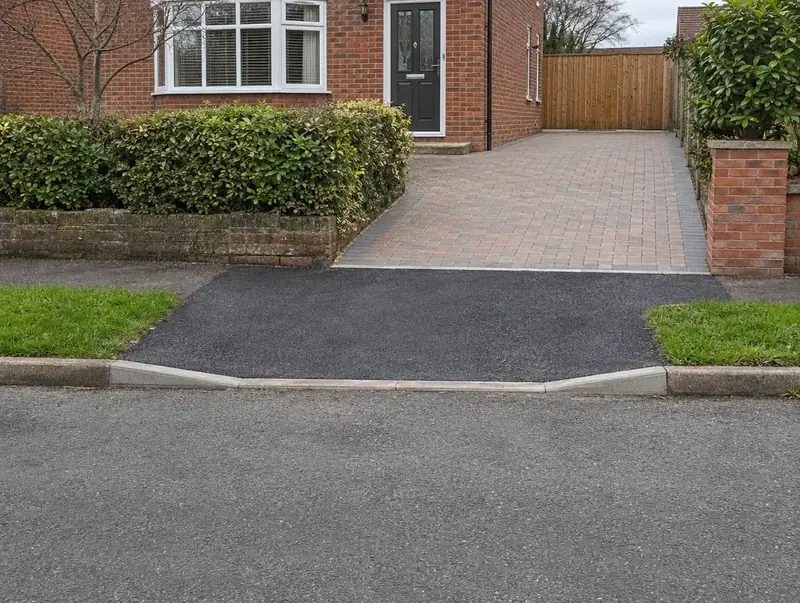
Dropped kerbs and vehicle crossings
Help with the highway authority application, and building the crossing where the council allows approved contractors.
FROM £1,000–£3,000 PER JOB INC VATLearn more →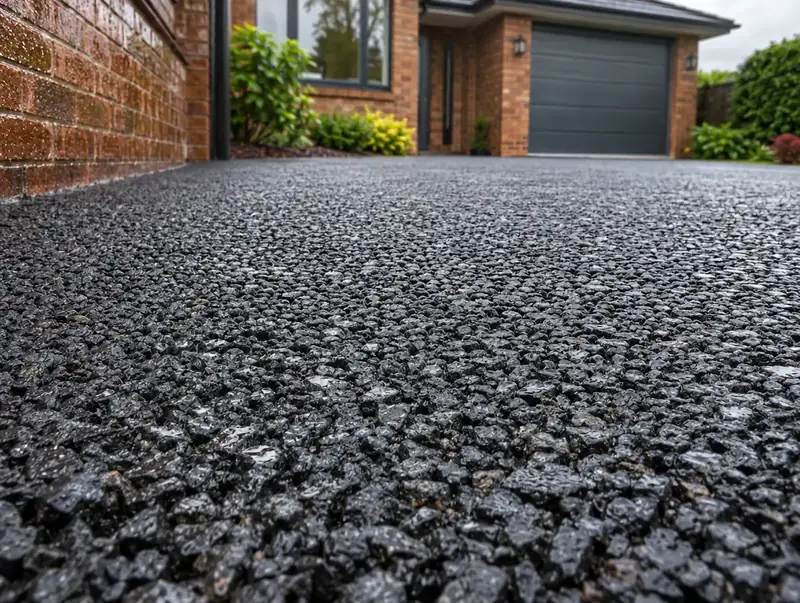
Permeable tarmac driveways
Open-graded porous asphalt on a deep permeable stone base, so rain soaks through on site.
FROM £80–£125 PER M² INC VATLearn more →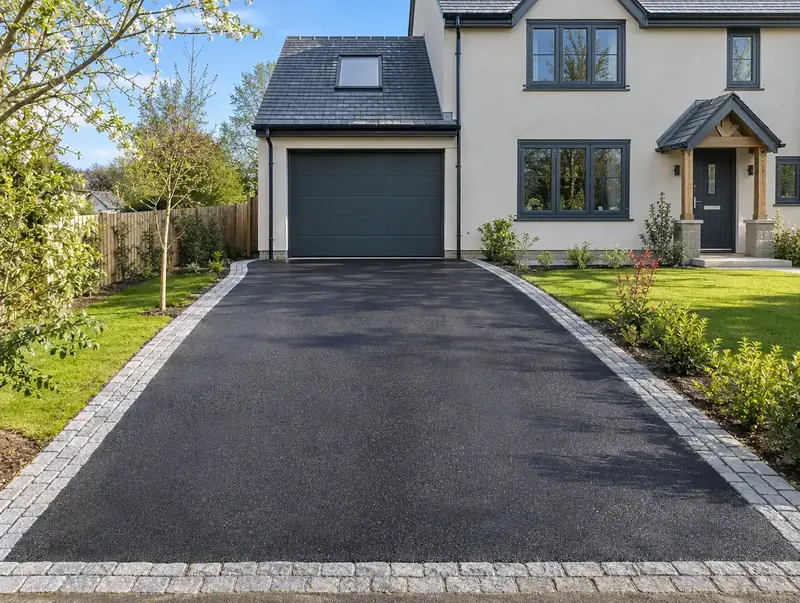
New tarmac driveways
Full dig-out, compacted stone sub-base, binder course and a fine surface course, edged and drained.
FROM £60–£95 PER M² INC VATLearn more →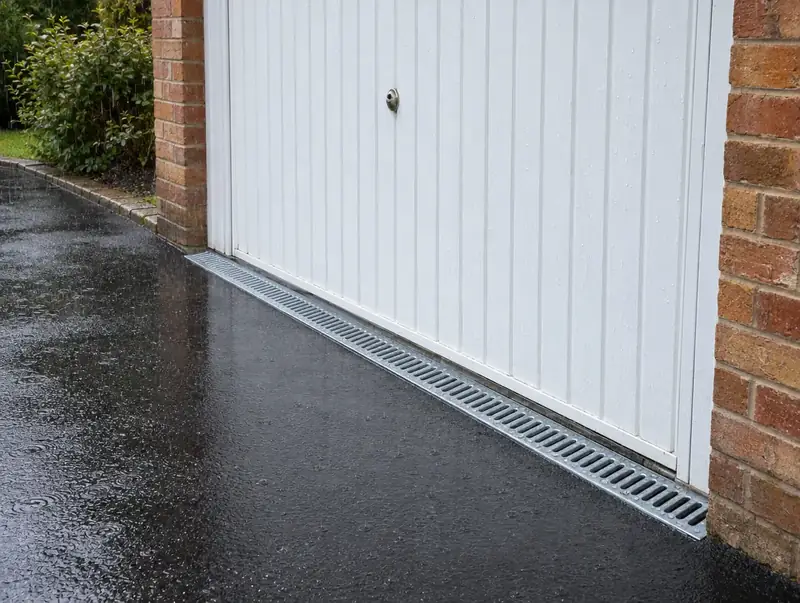
Drainage for tarmac drives
Falls, channels, gullies and soakaways so rain leaves the drive and stays out of your house.
FROM £60–£120 PER METRE INC VATLearn more →Get a written quote for front garden to tarmac driveway
Send a postcode and a rough size and we'll arrange a survey. Every quote lists the layers, edging, drainage and VAT.
- Surface courseDEPTH + MIX
- Binder courseDEPTH + MIX
- Sub-baseDEPTH + MATERIAL
- Edges, drainage, VATITEMISED