Can tarmac be laid in winter?
Yes, within limits. Hot asphalt must not be laid on a frozen, icy or wet surface, and BS 594987:2024 sets air temperature limits: generally stop at 0°C on a falling thermometer (−3°C in calm, dry conditions) and resume at −1°C or above on a rising thermometer.
Why temperature matters
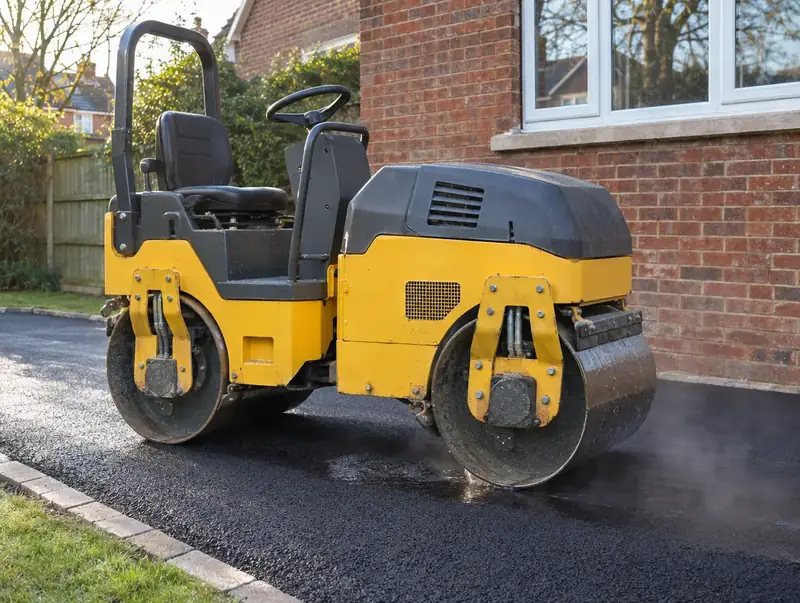
Hot asphalt has to be compacted while it is still warm enough to work. Cold air, wind and a cold base pull heat out quickly, especially from thin surface courses, so compaction suffers and the surface can fret early.
What we do in winter
- Watch the forecast and move dates rather than lay in poor conditions
- Lay thicker courses where possible, which hold heat longer
- Keep the base dry and frost-free
- Do groundworks and drainage in colder spells, surfacing on a better day
Is winter a bad time to book?
Not necessarily. Surveys, quotes, dropped kerb applications and groundworks all carry on, and dates can be firmed up as the weather allows.
Questions
Can tarmac be laid in the rain?
Light drizzle on a draining surface is sometimes workable; standing water or heavy rain is not.
Is summer tarmac better?
Warm, dry weather makes laying easier, but very hot days make new tarmac soft for longer, so aftercare matters more.
Related services
New tarmac driveways
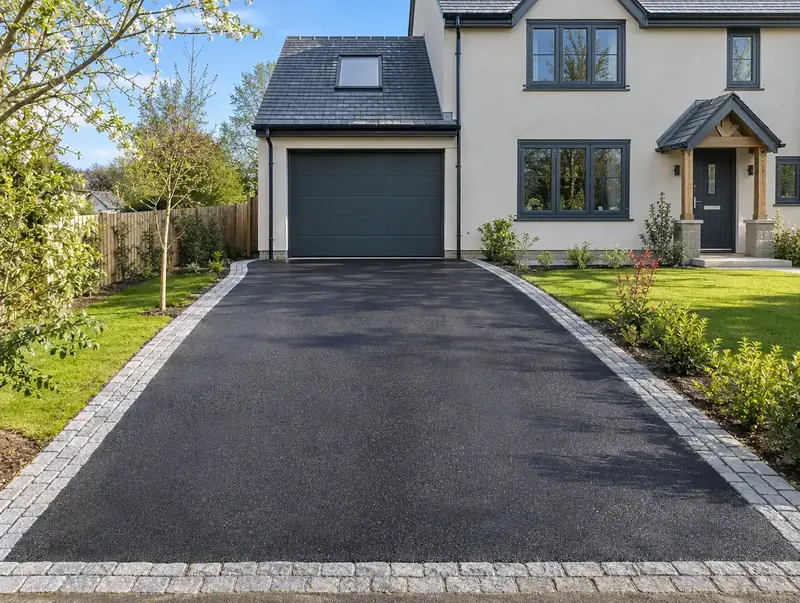
Full dig-out, compacted stone sub-base, binder course and a fine surface course, edged and drained.
FROM £60–£95 PER M² INC VATLearn more →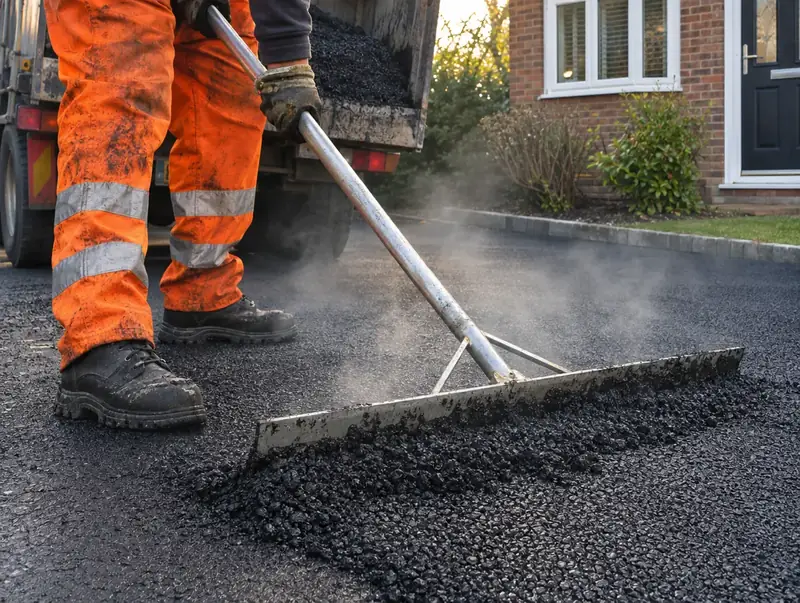
Tarmac driveway resurfacing
A new tack-coated surface course over a drive whose base is still sound: less digging, lower cost.
FROM £25–£45 PER M² INC VATLearn more →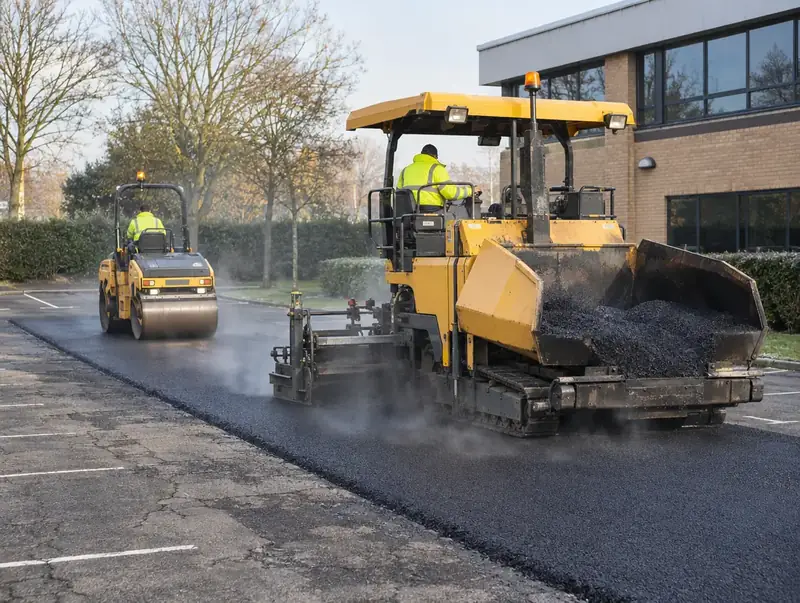
Car park resurfacing
Overlay or plane-and-inlay to renew a worn car park surface without rebuilding the base.
FROM £20–£35 PER M² EX VATLearn more →Get a written tarmac quote
Send a postcode and a rough size and we'll arrange a survey. Every quote lists the layers, edging, drainage and VAT.
- Surface courseDEPTH + MIX
- Binder courseDEPTH + MIX
- Sub-baseDEPTH + MATERIAL
- Edges, drainage, VATITEMISED