Porous asphalt explained: does permeable tarmac work?
Yes, when the whole build is permeable. Porous asphalt has gaps between the stones so rain passes through, but it needs an open-graded stone base to store the water while it soaks into the ground. On an ordinary dense base it simply traps water.
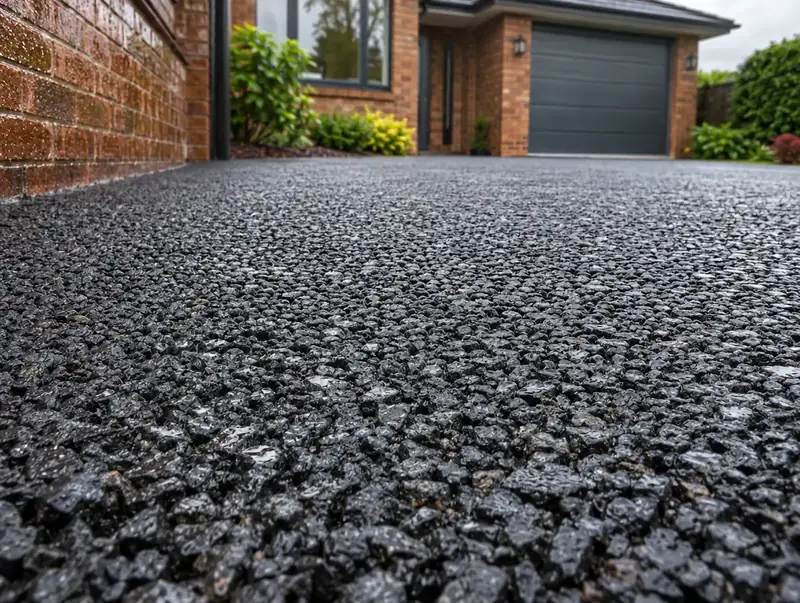
How does it work?
The asphalt mix leaves out most of the fine particles, leaving connected voids. Rain passes through the surface and binder into a deep layer of clean, open-graded stone, which holds it until it soaks away or flows to an overflow.
What base does it need?
An open-graded stone such as Type 3 or 4/20 clean stone, deeper than a standard drive base, on a geotextile. Dense Type 1 is not a substitute.
Will it work on clay?
It can, with a deeper storage layer and an overflow to a soakaway or border. We check how fast the ground drains before recommending it.
How do I look after it?
Keep soil, sand and leaves off it, sweep regularly and have it vacuum-swept if water starts to sit. Don't seal it with a standard driveway sealer.
Cost and planning
About £80–£125 per m² including VAT as a 2026 guide. In front gardens it normally keeps the drive within permitted development without a separate drainage route.
Questions
Does porous asphalt freeze?
It copes well because water drains away rather than sitting on the surface.
Is it suitable for car parks?
Yes, with an engineered design. Areas where heavy vehicles turn tightly are better in dense asphalt with separate drainage.
Related services
Permeable tarmac driveways
Open-graded porous asphalt on a deep permeable stone base, so rain soaks through on site.
FROM £80–£125 PER M² INC VATLearn more →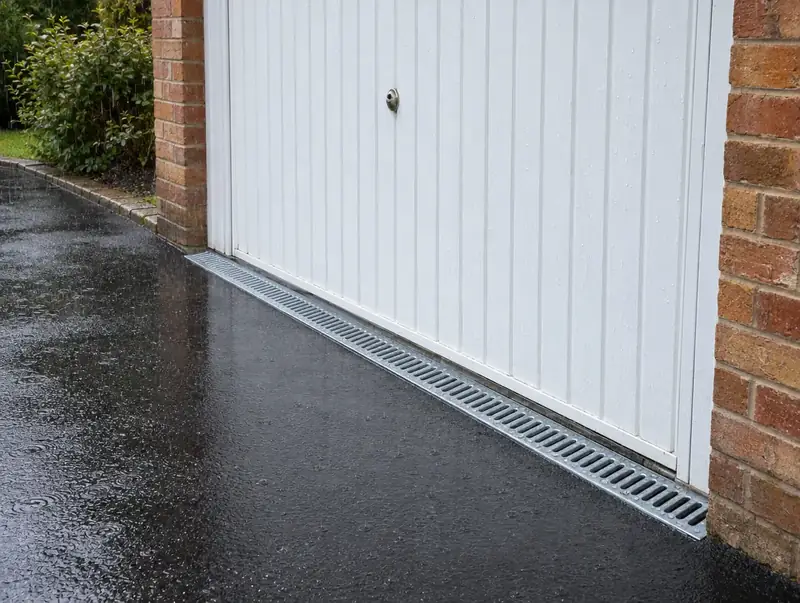
Drainage for tarmac drives
Falls, channels, gullies and soakaways so rain leaves the drive and stays out of your house.
FROM £60–£120 PER METRE INC VATLearn more →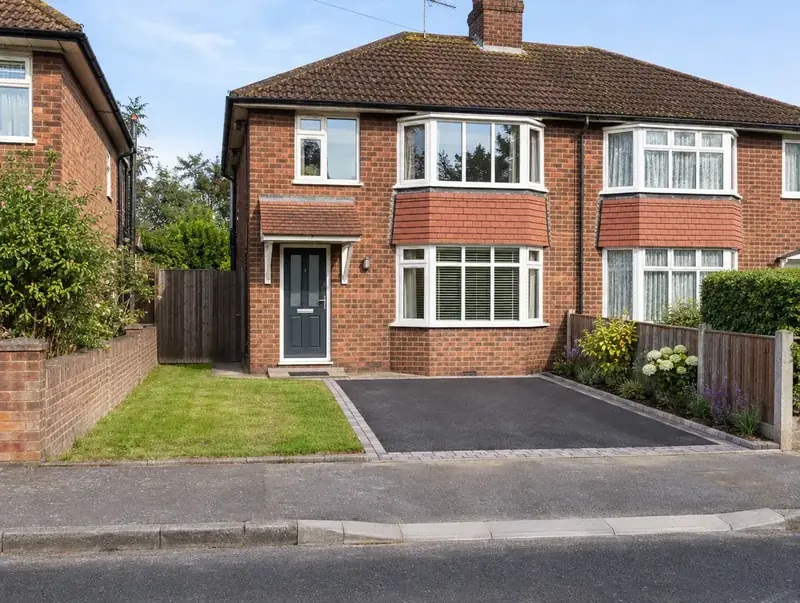
Front garden to tarmac driveway
Turning a lawn or front garden into off-road parking: dig, base, tarmac, kerb crossing and planting.
FROM £60–£95 PER M² INC VATLearn more →Get a written tarmac quote
Send a postcode and a rough size and we'll arrange a survey. Every quote lists the layers, edging, drainage and VAT.
- Surface courseDEPTH + MIX
- Binder courseDEPTH + MIX
- Sub-baseDEPTH + MATERIAL
- Edges, drainage, VATITEMISED