How thick should a tarmac driveway be?
For a domestic drive used by cars, a common build is about 150 mm of compacted MOT Type 1 sub-base, a 50–60 mm binder course and a 20–30 mm surface course, roughly 230–250 mm in total. Paths can be lighter; car parks and yards need more.
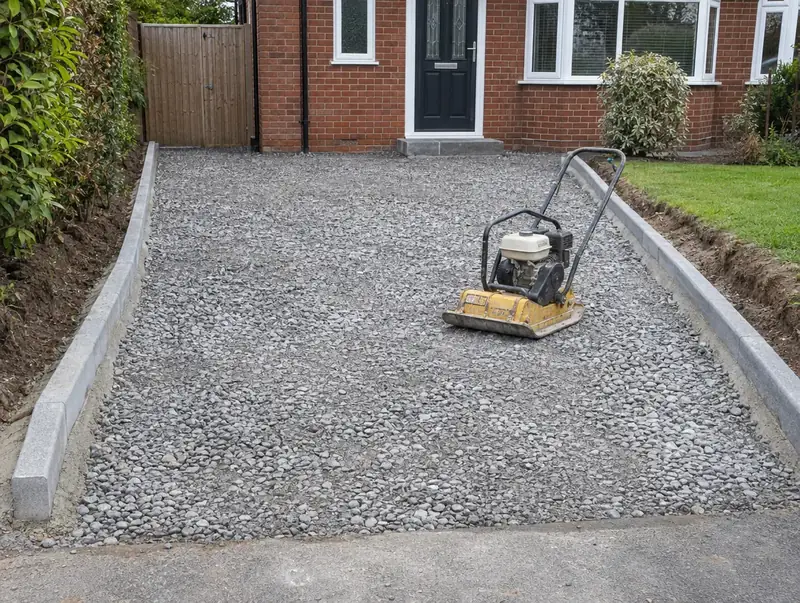
What are the layers in a tarmac drive?
From the bottom up:
- Formation: the dug-out ground, sometimes with a geotextile membrane on soft or clay soils.
- Sub-base: crushed stone, usually MOT Type 1, laid and compacted in layers. This carries the load.
- Binder course: a coarser asphalt, commonly AC 20 dense, which spreads the load and gives a firm level base.
- Surface course: a finer asphalt, commonly AC 6 dense, which gives the smooth finish and seals the top.
- Edges: kerbs, blocks or setts bedded and haunched in concrete.
Typical depths by job
| Use | Sub-base | Binder course | Surface course |
|---|---|---|---|
| Garden path | about 100 mm | 40–50 mm | about 20 mm |
| Car driveway | about 150 mm | 50–60 mm | 20–30 mm |
| Small car park | 200–300 mm | about 60 mm | 30–40 mm |
| Yard with vans | 250 mm+ | 60 mm+ | about 40 mm |
All depths are compacted and indicative. Soft ground, heavy vehicles and frost-prone sites need more, and the actual mix sets the permitted thickness: an AC 6 surface is usually laid 20–30 mm thick, an AC 10 close-graded mix 30–40 mm.
Which standards apply?
Asphalt mixes are specified under BS EN 13108 (part 1 covers asphalt concrete, the family that includes dense bitumen macadam), with UK guidance in PD 6691. Transport, laying and compaction are covered by BS 594987:2024. A good quote names the mix rather than just saying "tarmac".
Why does the sub-base matter most?
Tarmac is flexible. It follows whatever is underneath, so a thin or poorly compacted sub-base shows up as dips, ruts and cracks. Most of the difference between a drive that lasts five years and one that lasts twenty is below the surface.
Questions
Can tarmac be laid in one layer?
Thin single-layer tarmac is sometimes used on paths and light-use areas, but for a car drive two courses last much longer.
What is a tack coat?
A thin spray of bitumen emulsion that bonds a new asphalt layer to the one beneath. It is essential on overlays and between courses laid on different days.
Related services
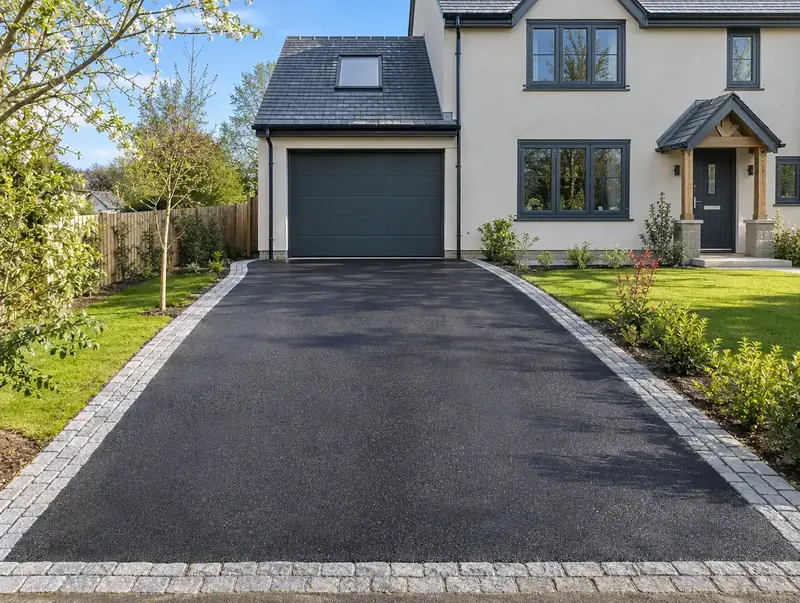
New tarmac driveways
Full dig-out, compacted stone sub-base, binder course and a fine surface course, edged and drained.
FROM £60–£95 PER M² INC VATLearn more →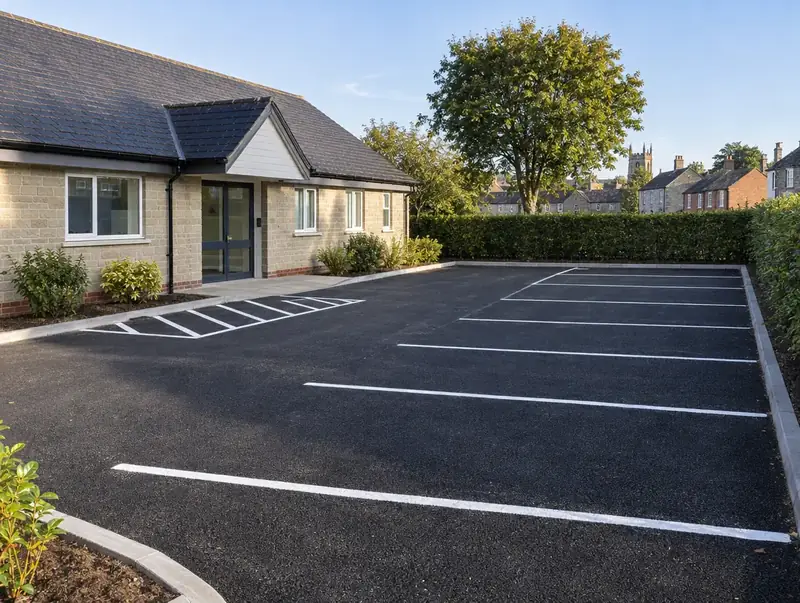
Car park surfacing
New small car parks built properly: deeper sub-base, dense binder and surface course, kerbs, drainage and lining.
FROM £50–£85 PER M² EX VATLearn more →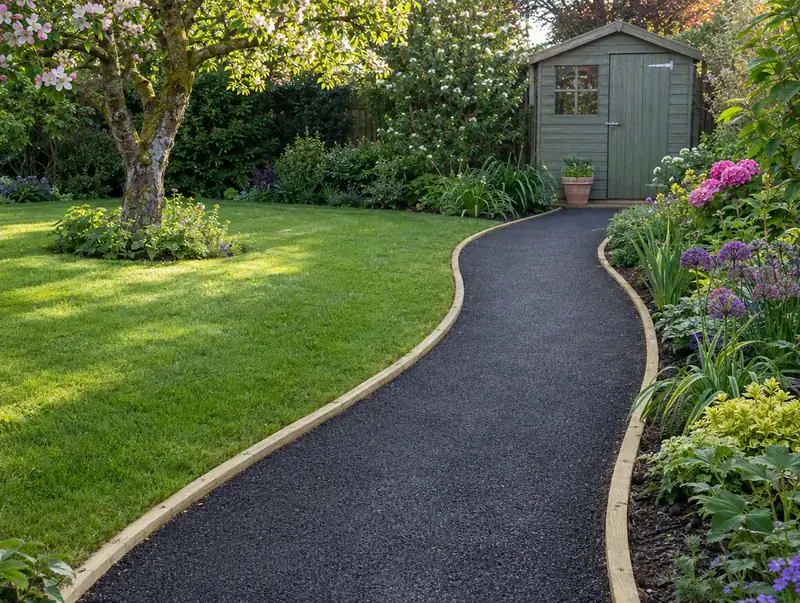
Tarmac paths and footpaths
Garden paths, side passages and footpaths in hot-laid tarmac, edged with timber, kerbs or blocks.
FROM £55–£90 PER M² INC VATLearn more →Get a written tarmac quote
Send a postcode and a rough size and we'll arrange a survey. Every quote lists the layers, edging, drainage and VAT.
- Surface courseDEPTH + MIX
- Binder courseDEPTH + MIX
- Sub-baseDEPTH + MATERIAL
- Edges, drainage, VATITEMISED